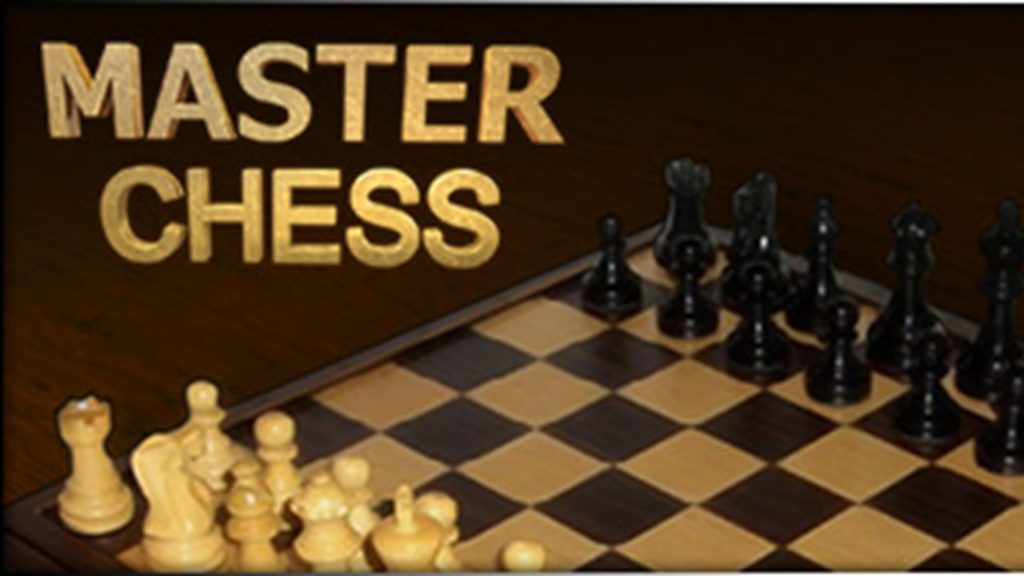
Master Chess is a classic strategy board game that lets players test their tactical skills against a computer opponent or challenge a friend in local multiplayer mode. Based on the timeless rules of traditional chess, the game rewards careful planning, smart positioning, and strategic thinking as you battle to checkmate your opponent’s king.
Choose from multiple difficulty levels to match your skill level, whether you’re a beginner learning the fundamentals or an experienced player looking for a serious challenge. Every match requires you to think several moves ahead, anticipate your opponent’s strategy, and make the best use of your pieces, including pawns, knights, bishops, rooks, queens, and the king.
Master Chess features intuitive drag-and-drop controls and a clean, easy-to-read game board that makes every move simple to execute. Study the position, develop your pieces, control the center of the board, and create powerful attacks while protecting your own king from danger. Success depends on strategy, patience, and the ability to adapt as the game unfolds.
Whether you’re practicing openings, improving your endgame technique, or enjoying a casual match, Master Chess provides an engaging experience for players of all skill levels. The game’s straightforward design allows you to focus entirely on the action without unnecessary distractions, making it ideal for quick games or extended strategic battles.
With smooth gameplay, classic chess rules, adjustable AI difficulty, and endless replayability, Master Chess is the perfect online game for anyone who enjoys brain-training challenges and competitive strategy. Play directly in your browser and sharpen your chess skills while enjoying one of the world’s greatest board games.
History of Chess
Chess is one of the oldest and most influential strategy board games in history, with origins dating back more than 1,500 years. The game is believed to have evolved from Chaturanga, a military strategy game played in India during the 6th century CE. Chaturanga featured pieces representing infantry, cavalry, elephants, and chariots, laying the foundation for the modern chess pieces used today.
From India, the game spread to Persia, where it became known as Shatranj. After the Islamic conquest of Persia in the 7th century, Shatranj spread throughout the Middle East, North Africa, and eventually into Europe. As traders, scholars, and travelers carried the game across continents, regional variations emerged, gradually transforming the rules and gameplay.
During the 15th century, chess underwent its most significant evolution in Europe. The queen became the most powerful piece on the board, bishops gained the ability to move across long diagonals, and several modern rules were introduced. These changes made the game faster, more dynamic, and closer to the version played today. This period is often referred to as the birth of modern chess.
By the 18th and 19th centuries, chess had become a respected intellectual pursuit across Europe. Organized clubs and international competitions began to appear, and the first official World Chess Championship was held in 1886, with Wilhelm Steinitz becoming the first recognized World Chess Champion. His emphasis on positional strategy helped shape the principles of modern competitive chess.
The 20th century saw chess grow into a truly global game. The establishment of the International Chess Federation (FIDE) in 1924 standardized tournament rules and organized world championships. Legendary players such as José Raúl Capablanca, Alexander Alekhine, Mikhail Botvinnik, Bobby Fischer, Anatoly Karpov, Garry Kasparov, Viswanathan Anand, and Magnus Carlsen inspired generations of players through their remarkable achievements and contributions to chess theory.
Chess also played a major role in the development of computer science and artificial intelligence. In 1997, IBM’s Deep Blue became the first computer to defeat reigning World Chess Champion Garry Kasparov in a match under standard tournament conditions. This historic event demonstrated the growing capabilities of AI and marked a milestone in both technology and chess history.
With the rise of the internet, chess experienced another surge in popularity. Online platforms made it possible for players to compete against opponents from around the world, solve puzzles, watch live tournaments, and learn from interactive lessons. The game’s popularity increased even further in 2020, when the success of The Queen’s Gambit television series introduced millions of new players to chess and sparked renewed global interest.
Today, chess is played by hundreds of millions of people worldwide and is recognized as one of the greatest strategy games ever created. Its timeless combination of skill, logic, creativity, and competition has allowed it to endure for centuries. Whether played casually, competitively, or online, chess continues to challenge players of all ages and remains a cornerstone of gaming history.